Classics Wellbeing Journal
An ancient guide to modern dilemmas
Undergraduate students Reece Harriott and Astrea Pulcinelli Triossi were part of the 2025 Modern Classics cohort, and designed the following Applied Classics podcast project to enhance contemporary wellbeing via Classical wisdom. They describe their project below:
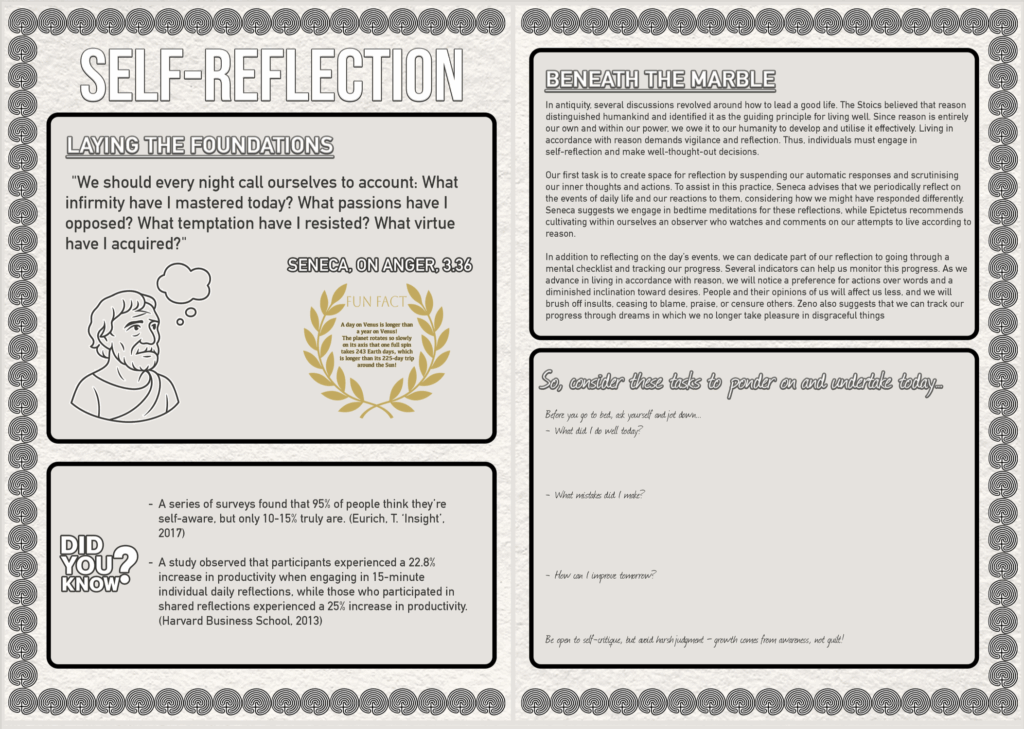
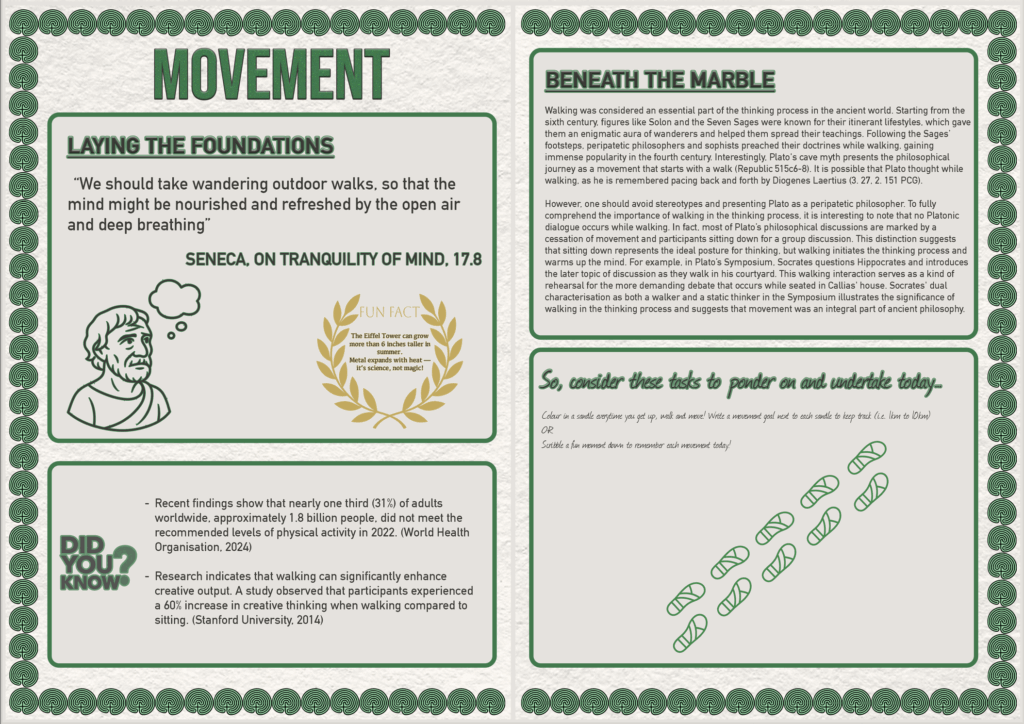
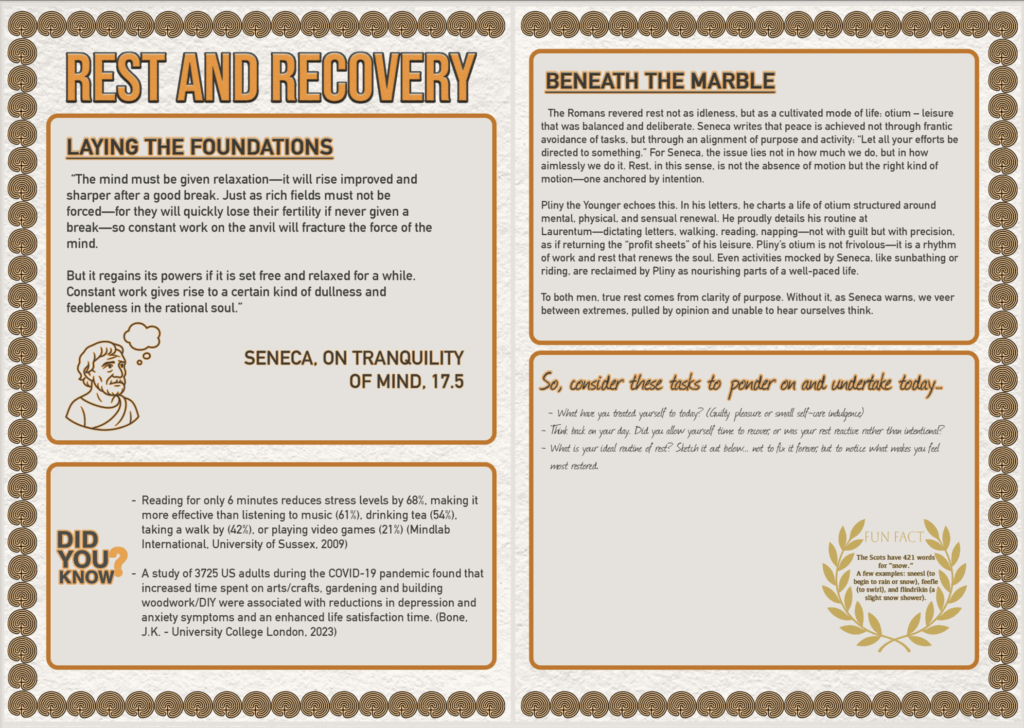
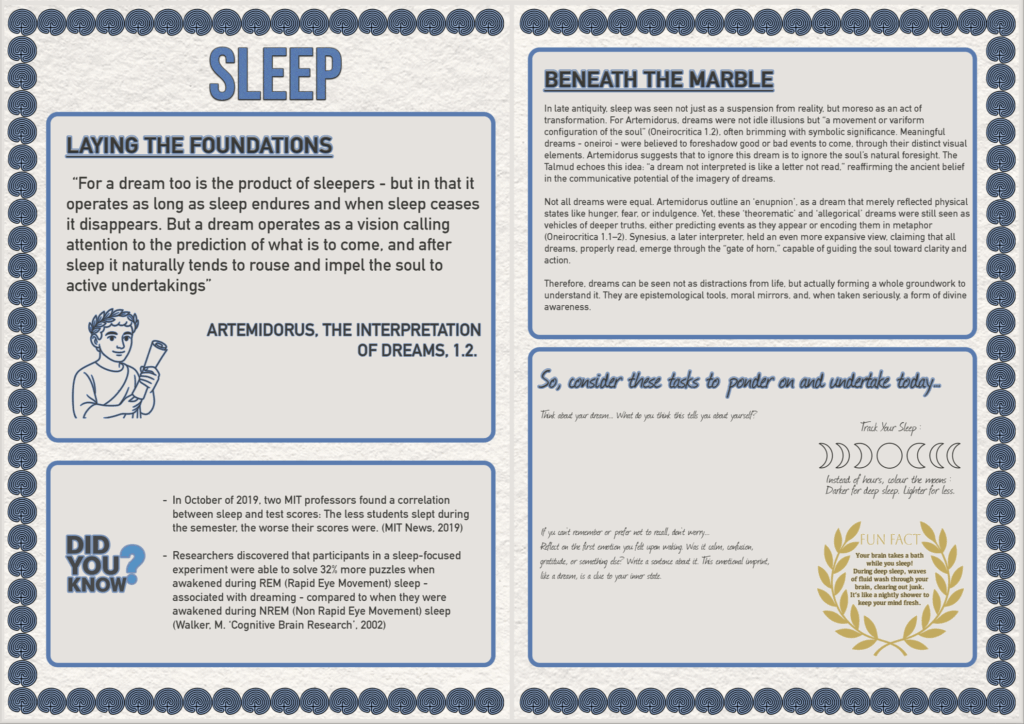
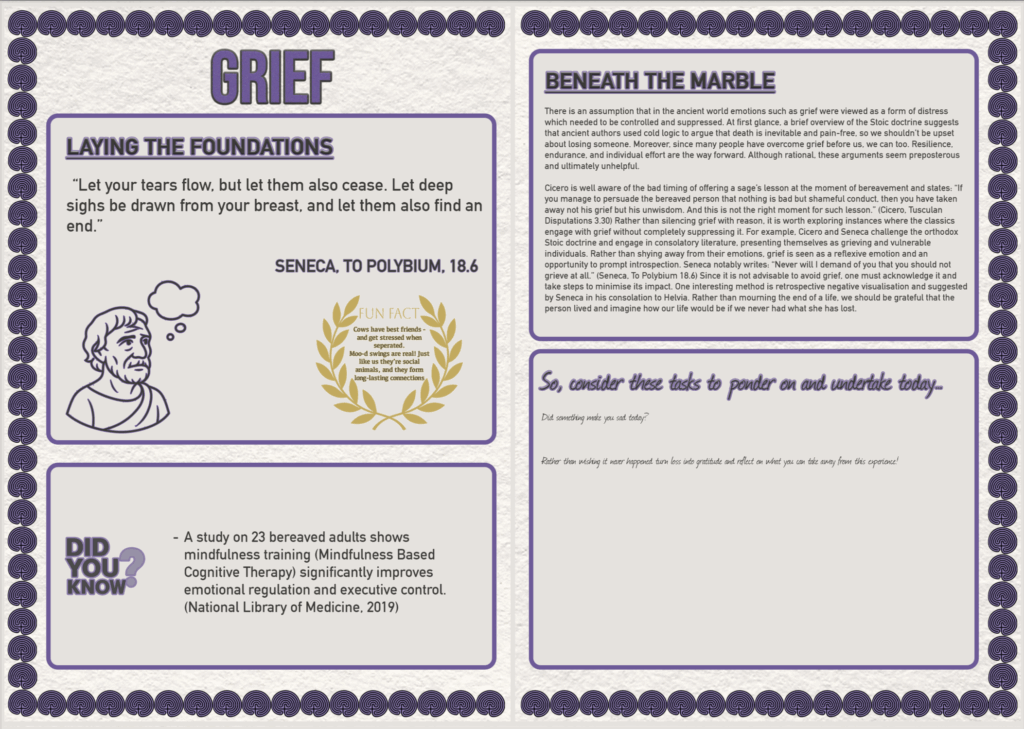
Our mission is to improve mental health and well-being through classical arguments. Rather than imposing fixed dogmas or rigid ideas, this journal offers the opportunity to think with the classics, encouraging self-reflection and creative thinking. By drawing from both ancient and modern sources, we hope to highlight the continuity between past and present, challenging stigmas and inspiring meaningful conversations both within ourselves and with those around us.
The project was inspired by the UN’s Sustainable Development Goal 3: Good Health and Well-being and SDG 3.4, which states: “By 2030, reduce by one third premature mortality from non-communicable diseases through prevention and treatment and promote mental health and well-being.“ The UN goals confront us with the pressing issue of mental health. In 2019, the World Health Organisation reported that 970 million people globally were living with a mental disorder, with anxiety and depression being the most common. This equates to roughly 1 in 8 people worldwide, while Mind reports that around 1 in 4 experience a mental health issue in the UK.
This is where we felt Applied Classics could come in. We don’t look towards the ancient world for a diagnosis, but rather we look towards it as it was full of people asking how to live day by day. So, rather than fixating on the statistics and the why, we aim to utilise the classics to ‘tell a human story’. A story that reflects a continuity of thought, where ancient voices were already asking the questions of ‘how’ and offering many answers that we can still employ today.
By presenting ancient sources in a modern format, the diary can appeal to two distinct audiences simultaneously:
- Gen Z: Younger readers who are familiar with wellness journals may be drawn in by the format of our diary and discover the richness of the classical world.
- Sceptical boomers: Older generations who often dismiss the importance of mental health might find the authority of classical texts a persuasive entry point to engage in these discourses.
To find out more, please explore our sample pages below. You can also read more about the project in this blog.