Dialogues between Ancient and Modern Women
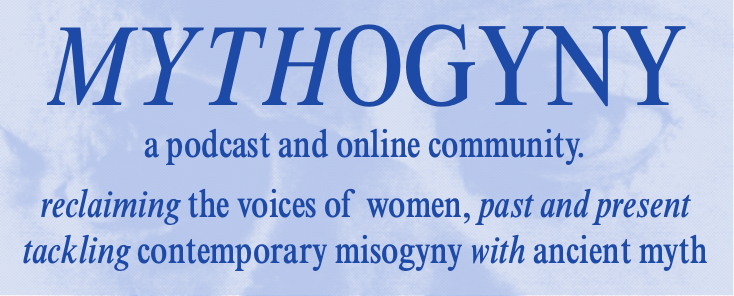
In this blog, UG student Lilliana Mitchell discusses her journey as an Applied Classicist and the podcast she designed to bring ancient and modern women into informative, supportive dialogue with each other.
When I walked into the first day of “Classics for the Modern World”, I had very little idea of what to expect. Having spent my first two years at St Andrews studying the epics, elegy, and historical timelines of the major figures of antiquity, I thought I understood wholly what I would leave university with knowledge of – appreciating a distant and often idealised past. Other than through film and fiction, I had never really thought about how Classics could be applied outside academia, or conceptualised how it could become a tool for activism and public engagement. By the end of this module, however, my understanding of my subject has genuinely shifted. Ancient history is no longer something stuck in the past, but rather a resource that can be brought into dialogue about challenges in our society today.
“Applied Classics” can be defined as “the purposeful application of carefully chosen aspects of antiquity as a useful intervention in a contemporary challenge.”[i] These applications, which must be done critically and mindfully due to the discipline’s connection to colonialism and the promotion of Western traditions, can offer new and innovative ways to think about modern issues.[ii] This concept fits into the broader idea of “citizen scholarship”, an idea that resonated with me as the module developed.[iii] Citizen scholarship aims to cultivate students who are not only proficient in their area of study but who also desire, and know how, to apply this knowledge for the betterment of society.[iv] It transcends the traditional rigidity of academia by encouraging problem-oriented and socially engaged learning, fostering students who recognise their responsibility within society and who are equipped with how to respond to contemporary challenges.[v]Applied Classics reflects this approach as it requires careful reflection on how ancient material can be used to combat modern issues and promote innovative problem-solving without reinforcing outdated paradigms. The concepts of citizen scholarship and applied classics have offered me a renewed sense of motivation for my studies. After years of analysing ancient texts and debating historical interpretations, it was refreshing to design an Applied Classics project which bridged the gap between the subject I love and meaningful public engagement. In this blog I will explore the positives and pitfalls of bringing ancient material into conversations on modern problems, discuss my experience working in a team, and reflect on my personal experience of identifying and creating an applied classics project combatting a real-world issue.
Inspirations
Firstly, I would like to explore two case-studies we looked at, at the start of the module, which I believe significantly affected how I approached my own project and understood the concept of applied classics as a whole. One of these was Neville Morley’s research on the modern misappropriation of classical references, and his “Thucydides Bot”, which alerted me to one of the major risks of bringing ancient sources into modern political contexts.[vi] Morley details how people frequently use classical quotes ambiguously and selectively, conveniently choosing soundbites which already support their narrative.[vii] Focusing solely on the similarities between now and antiquity, rather than considering the wider political context, many use quotes from figures like Thucydides to add authority to their arguments, sometimes promoting toxic ideologies.[viii] This phenomenon has been further unpacked by those at Working Classicists, who labelled the phenomenon as an “antiquity to alt-right pipeline”: through engaging with ancient history on social media, your feed can quickly feature radical, political posts on themes from anti-woman rhetoric to white supremacy.[ix] The use of Greco-Roman quotations and imagery alongside sexist and racist contemporary political propaganda is a rising issue in the discipline. These examples made me more aware of how easily Classical material can be decontextualised and weaponised in the modern world, building on my previous research on Pharos’ “Pseudonyms” project.[x] As a result, I became more intentional in how I planned to incorporate ancient sources into my own project, ensuring that any references were contextualised and their complexity acknowledged. It also encouraged me to reflect more deeply on the ethical implications of engaging with ancient sources considering the history of the discourse alongside the modern misuses which risk reinforcing exclusionary and harmful mindsets.
Another example of Applied Classics that shaped my approach was the use of theatre to connect classical texts with the modern world, especially through accessibility and emotional engagement. Seeing how companies like Aquila Theatreand Theater of War reimagine ancient texts showed me the power of storytelling to bridge myth and modern experiences. Aquila’s “Our Trojan War”, which explored Homeric epic in the context of modern democracy to an audience of American veterans, and Theater of War’s Antigone in Ferguson Project, which brought myth to new audiences at the Brooklyn Public Library, demonstrated how Classical drama can foster reflection, empathy and even healing.[xi] These performances do more than rehash old stories, acting as tools for open and honest conversations about trauma and the importance of community. Companies like these, and others such as NMT Automatics, offer models for how theatre can bridge past and present, reaching beyond academic circles to real world audiences.[xii] Exploring theatre as a methodological framework for Applied Classics made me think more practically about the opportunities and limitations when creating my own project. It highlighted theatre’s capacity to entertain, connect and transform; however, it also drew attention to challenges such as accessibility, whether geographic, financial or cultural. This sparked my interest in storytelling and creative expression, specifically how mythology can still be relevant in a modern context, while also making me aware of the importance of ensuring our work was available to all.
A team of women
Inspired by these innovative approaches to ancient material and contemporary issues, I felt excited yet daunted as I began developing my own Applied Classics project. When forming our group, the process was natural. As three young women, we were immediately drawn to working together and to the subject of gender inequality, an issue alarmingly present in both ancient texts and our own lives. Our discussions, influenced heavily by Helen Morales’ “Antigone Rising” which we had all previously read and adored, gravitated toward the silencing of women’s voices across history, and we quickly saw the potential in homing in on this theme through a 21st century lens. The prevalence of incel culture, the “manosphere” and gender-based violence in the media at the moment further emphasised the relevance of our topic. We discussed television shows such as Stephen Graham’s “Adolescence”, which explores sexism in young men, and podcasts like “Tate Speech”, hosted by the controversial and self-proclaimed misogynist Andrew Tate, and ideas started flowing. Initially we considered hosting workshops or therapeutic sessions but recognised the ethical and practical restraints of such an approach given our lack of expertise and training. Instead, we settled on designing an online resource, something which could be informative, inclusive, and shaped by the stories of women in ancient myth, without attempting to offer solutions beyond our capacity. It was important for us to balance pragmatism and idealism – targeting a root issue without having unachievable goals.
This process of refining our ideas was very collaborative and our decision-making benefitted from open communication within the group. Scarnati defines teamwork as “a cooperative process that allows ordinary people to achieve results”, and I think this quote resonates with our own collaborative dynamic and academic journey.[xiii] Effective teams work towards a shared goal while building mutual relationships and this is something we prioritised from the outset by cultivating a supporting and communicative environment.[xiv] We recognised that our topic could potentially evoke sensitive and traumatic experiences, so we tried to create a sense of comfort and safety within the group, meeting in relaxed settings to help break down barriers and allow for open and honest conversations. This atmosphere allowed for deeper levels of personal engagement with the subject matter. For example, I felt comfortable enough to share aspects of my own lived experience, including a past toxic relationship, and how I had found unexpected resonance in ancient texts, like the portrayal of Dido in Virgil’s Aeneid. The complexity of her story – the abandonment and manipulation – held similarities to my own experience and reinforced the necessity for something to be created to connect female ancient voices and those today. This moment of disclosure was met with solidarity and relatability, demonstrating the strength of our interpersonal connection, our shared commitment to the project and to treating each other and the ancient narratives with sensitivity and respect.[xv]
Once settled on the issue we wanted to focus on, we began to read around the subject. Donna Zuckerberg’s “Not All Dead White Men” was particularly compelling, exposing the troubling relationship between Classical references and “red pill” communities. Through comparing Ovid’s Ars Amatoria with the language and tactics of contemporary “pick-up artists” and game community authors such as Daryush Valizadeh and Neil Strauss, Zuckerberg demonstrates how ancient and modern seduction techniques often reduce women to objects, stripping us of agency whilst raising male entitlement.[xvi]Whilst classicists frequently interpret Ovid’s “Art of Love” as ironic or subversive – particularly given the conservative political context of Augustus’ rule – in the “manosphere” it is read at face-value as an instruction manual for conquest.[xvii] Reading this analysis was a pivotal moment for me. It made me acutely aware of the privilege I hold as someone in higher education with the tools and knowledge to approach ancient texts critically, and also of how dangerous selective, decontextualised readings can be. Using Ovid as a way to gain authority fuels a culture that normalises manipulation, boundary violations, and violence against women, making it clear that how we engage with the past matters so much in the present.[xviii] This book helped lay the foundation for our further research.
Podcasting
Encouraged to look further into the field of Applied Classics and gender, I listened to The Classical Association’s “Classics and Careers” podcast episode featuring Rhodessa Jones, an “artivist” and founder of The Medea Project, a programme that empowers incarcerated women in the United States to find their voices through theatre and ancient myth.[xix] I found this episode extremely moving, as I have long been interested in how the justice system addresses issues affecting women, particularly in terms of trauma and mental health support. Although we had already moved away from the idea of designing our own workshops, listening to the episode prompted the proposal of an alternative – the creation of our own podcast. We envisioned a platform that could interconnect the stories of female figures in mythology with contemporary issues, featuring professionals in fields such as relationship therapy and personal development. The podcast, and accompanying social media presence, would serve as a digital space where women could find ancient stories with resonance today, addressing experiences ranging from casual misogyny to feminist movements to emotional abuse.
I took on the responsibility of researching podcasting as a method of communication, the opportunities and potential issues that can arise from the medium, and its current connection to far-right, misogynistic online communities. Firstly, I looked at statistics on podcast listeners and creators; to help build on our foundational knowledge of the genre and spark conversations on topics such as target audience and outreach. Unsurprisingly, 77% of young people in the U.S had listened to a podcast before, with 61% using it as a method to keep up with social issues.[xx] This confirmed our target age bracket to sixteen to twenty-five, and consolidated our belief that podcasting was a successful method for speaking on problems of social justice. Furthermore, 84% of Gen-Z listeners engaged with the podcasts they listened to through social media platforms, which encouraged us to create Instagram and X accounts for our brand.[xxi] A 2022 survey revealed that only 30% of podcast creators identified as woman, yet 90% of female monthly listeners preferred content made by other women.[xxii] As three women producing content aimed at female audiences and focusing on stories of women from the past and present, this statistic was especially encouraging and validated the direction we were taking.
Podcasting has emerged as a uniquely flexible and portable tool for learning and information-sharing, due to being accessible to users anytime and anywhere.[xxiii] This, at first glance, appears as a positive, but it also makes it an ideal vector to spread political ideologies. This has been demonstrated by male supremacist and far-right content, with creators seizing this format to produce shows like “Fresh and Fit” and “Good Bro Bad Bro”, which cater to young men’s insecurities around sex, gender identity and success.[xxiv] These podcasts draw on “Red Pill” and “Black Pill” ideologies, which frame women as the oppressors and men as victims of a feminised society.[xxv] The narratives reinforce victim blaming, toxic masculinity, and the subordination of women, hiding behind the label of therapeutic advice and authoritative references. Furthermore, studies show a clear link between exposure to this content and real-world harm with greater exposure to rape myths (false beliefs about incidents of sexual assault, such as that if a person is under the influence they hold responsibility) directly correlating to increased likelihood of attempted rape.[xxvi] An interesting analysis from Bujalka and Bender further developed my understanding of how deep rooted these issues are. They state that the “manosphere” thought-leaders function like a protection racket, drawing individuals in, generating anxiety about masculinity in a liberal context, and then sell solutions to the male audiences who feel disenfranchised.[xxvii] It is more than just incels promoting their personal harmful ideologies online, it is a profitable venture which is continually expanding.[xxviii] Whilst podcasting offers an accessible platform for spreading information, the current misuse underscores the urgency for critical media literacy and for other podcasts who showcase female voices and stories of gender empowerment to counteract the current narrative which normalises misogyny.
From Medea to Modernity
Motivated to bring a fresh perspective to the genre, we began outlining potential podcast episodes. Due to time limitations, we were not able to explore each proposed segment in depth, but I will discuss my research on Medea as a case study, particularly how her narrative intersects with modern ideas such as the “crazy-ex” trope and themes of emotional manipulation. In the noted Greek tragedy by Euripides, Jason’s ruthless ambition leads him to abandon Medea – who sacrificed her homeland, family, and identity for him – in order to secure greater political power through marriage.[xxix] His betrayal is rationalised as a strategic, mutually beneficial move, just as modern emotional manipulation often prioritises male ambition. When Medea expresses her fury, it is often seen as irrational, an early iteration of the “psycho ex-girlfriend” trope that persists today.[xxx] This gendered narrative dismisses female anger as hysteria and Medea’s actions, whilst horrifying, stem from a desperate assertion of agency in a world that denies her of voice and control.[xxxi]Past readings have labelled her as mad, without considering the complexity of her motivations, thereby reinforcing the cultural pattern which pathologizes feminine emotion to preserve male narratives.[xxxii] By revisiting Medea with a critical, modern lens, we aim to challenge outdated assumptions and encourage more nuanced discussions about gender, power dynamics, and emotional expression.[xxxiii]
The development process of these draft podcast episodes provided a valuable opportunity to critically assess the viability of our ideas. Our emphasis on storytelling and the reclamation of female voices seemed both purposeful and resonant, drawing on inspiration from classical reception authors like Pat Barker and Natalie Haynes who have successfully shone new light on silenced women via novels like Silence of the Girls and A Thousand Ships. This gave us confidence in our ability to highlight marginalised characters and explore their relevance to ongoing issues of gender equality. If given the opportunity to revisit the project, I would have devoted greater attention to direct engagement with primary material and developing more original, creative reinterpretations of myth which highlighted the role of women. This approach would have added further depth to the episodes and more explicitly reinforced our central objective to reclaim and reimagine traditionally marginalised female narratives within classical literature.
From the outset, we wanted to treat the podcast as a tangible project rather than a purely theoretical exercise for a university module. We particularly enjoyed the creative aspects, such as brainstorming titles, exploring marketing strategies, identifying potential collaborations with charities and university societies, and envisioning ideal guest speaks. We ultimately selected the name “Mythogyny”, established a visual identity through colour schemes and graphics which bridged antiquity and modernity, and discussed partnerships with initiatives like Fife Women’s Aid and GotConsent?. We also spoke about activists, Classicists, and mental health professionals who could lend credibility to our project and fill the gaps that our own expertise could not fill. Had the project progressed further, we would have loved to implement these ideas more concretely through reaching out to these people and organisations. Furthermore, we would have produced a pilot episode and used a focus group, composed of both Classics students and those from other disciplines, to gather feedback, assess emotional resonance and work on clarity of content. We were committed to being interdisciplinary, in both the guests and audience, and cultivate a sense of collaborative community. This was a theme that emerged frequently in our seminars, especially when exploring the productive relationship between Classics and Climate Science, which underscored the importance of using historical patterns to inform challenging, contemporary decision-making on problems like climate change.
To conclude, this module has fundamentally reshaped my understanding of what it means to study the ancient world. Through critically engaging with the principles of Applied Classics and citizen scholarship, I have come to see ancient material not as static but dynamic and as a way to inform, challenge and enrich modern political conversations. Designing the project has allowed me to build on my critical thinking skills, and offered a uniquely emotional insight into the relevance ancient narratives have on contemporary struggles. While I fully recognise the limitations to what we could achieve in the time frame and with the resources available, the process has still taught me a lot about the value of interdisciplinarity, the ethical responsibility we hold as classicists when dealing with ancient material, and the power of teamwork and creativity. I intend to carry this mindset with me as I continue to explore Classics beyond St Andrews, particularly during my upcoming summer course at The British School at Athens, where I hope to further reflect on how classical study can engage in modern contexts outside the classroom. I feel more equipped and more motivated to use my academic privilege not just to study what happened in the past, but to meaningfully contribute to the present as a proud citizen scholar.
Bibliography
Arvanitakis, James, and David Hornsby, Universities, the Citizen Scholar and the Future of Higher Education, Palgrave Macmillan, 2016.
Arvanitakis, James and David Hornsby, “Citizenship and the Thinking University: Toward the Citizen Scholar” in Bengtsen, S. and Barnett, R. (eds.), The Thinking University: Debating Higher Education: Philosophical Perspectives, Springer, 2018.
Arvanitakis, James, Robin Moore, and David Hornsby, “Why the time is right to create a new generation of ‘citizen scholars’”, https://theconversation.com/why-the-time-is-right-to-create-a-new-generation-of-citizen-scholars-51922
Bongie, Elizabeth Bryson, ‘Heroic elements in the Medea of Euripides’, Transactions of the American Philological Association, 107 (1977).
Buljaka, Eva and Stuart Bender, “The Manosphere as an Online Protection Racket: How the Red Pill Monetizes Male Need for Security in Modern Society”, Fast Capitalism, 19.1 (2022).
Euripides, Medea, trans. E.P. Coleridge, 2016.
Hew, Khe Foon, “Use of Audio Podcast in K–12 and Higher Education: A Review of Research Topics and Methodologies”, Educational Technology Research and Development, 57:3 (2009).
Kelly, Megan, Alex DiBranco, and Julia DeCook, “Misogynistic Incels and Male Supremacism: Overview and Recommendations for Addressing the Threat of Male Supremacist Violence”, New America, https://www.newamerica.org/political-reform/reports/misogynist-incels-and-male-supremacism/
Kirke, Phoebe, “Why the ‘Crazy Ex’ is a Myth”, https://medium.com/the-virago/why-the-crazy-ex-is-a-myth-6c347aafbf32
König, Alice, “Teaching Classics as an Applied Subject”, The Journal of Classics Teaching, 25:49 (2024).
Marsales, Emma, “Join the Brotherhood!: How ‘Alpha Male’ Podcasts are Targeting Men”, The Ethnograph, 2023.
Morley, Neville, “Thucydides and Contemporary Politics: A Syllabus”, https://eidolon.pub/thucydides-and-contemporary-politics-a-syllabus-b169c8e7c41a
Morley, Neville, “Why Thucydides?”, https://eidolon.pub/why-thucydides-55b145152ec3#.4mz64sjpb
NMTS Automatics, https://nmtautomatics.com
Onomasticon of Classical Pseudonyms and Avatars, https://pharos.vassarspaces.net/onomasticon-of-classical-pseudonyms-and-avatars/
Pillai, Sangeeta, “Is Podcasting Sexist? The Facts Say Yes…”, The Podcast Academy, https://www.thepodcastacademy.com/podcasting-industry-insights/is-podcasting-sexist
Scarnati, James, “On Becoming a Team Player”, Team Performance Management: An International Journal, 7 (2001).
Smit, Betine Van Zyl, ‘Medea the Feminist’, Acts Classics, Vol. 45 (2002).
Tarricone, Pina, and Joseph Luca, “Successful Teamwork: A Case Study”, Quality Conversations, Proceedings of the 25th HERSA Annual Conference, 2002.
Thulin, Elyse, Autumn Florimbio, Maureen Walton, and Erin Bonar, ‘Measuring Electronically Shared Rape Myths: Scale Creation and Correlates’, Journal of Interpersonal Violence, 39 (2024).
Trezevant, Tallulah, “The Antiquity to Alt-Right Pipeline”, Working Classicists, https://www.workingclassicists.com/zine/the-antiquity-to-alt-right-pipeline
Zuckerberg, Donna, Not All Dead White Men: Classics and Misogyny in the Digital Age, Harvard University Press, 2018.
Aquila Theatre Company: About, https://www.aquilatheatre.com/about
Antigone in Ferguson (Brooklyn 2019), Theater of War, https://theaterofwar.com/special-initiatives/antigone-in-ferguson-in-brooklyn-2019
Interview with Rhodessa Jones, Classics and Careers: The Classics Podcast, https://open.spotify.com/episode/0QYKQ9vKUveu500Xn2vHVU
The Gen-Z Podcast Report, SXM Media: Edison Research, http://www.edisonresearch.com/wp-content/uploads/2023/06/Gen-Z-Podcast-Listener-Report.pdf
@FreshFitMiami, YouTube Channel, https://www.youtube.com/@FreshFitMiami
@GoodBroBadBro, YouTube Channel, https://www.youtube.com/c/GoodBroBadBro
@Thucydiocy, X (formerly Twitter), https://x.com/thucydiocy
[i] Alice König, ‘Teaching Classics as an applied subject’, The Journal of Classics Teaching, 25:49, (2024), P.6.
[ii] Ibid. P.9-10.
[iii] Ibid.
[iv] James Arvanitakis and David Hornsby, Universities, the Citizen Scholar and the Future of Higher Education, (Palgrave Macmillan, 2016), P.1.
[v] James Arvanitakis and David Hornsby, “Citizenship and the Thinking University: Toward the Citizen Scholar” in Bengsten, S. and Barnett, R, The Thinking University: Debating higher Education: Philosophical Perspectives, (Springer, 2018), P.197-198.
James Arvanitakis, Robin Moore, and David Hornsby, “Why the time is right to create a new generation of ‘citizen scholars’”, (2015), <https://theconversation.com/why-the-time-is-right-to-create-a-new-generation-of-citizen-scholars-51922> [Accessed 28/4/2025].
[vi] <https://x.com/thucydiocy>, [Accessed 29/4/2025].
[vii] Neville Morley, “Thucydides and Contemporary Politics: A Syllabus”, (2017), <https://eidolon.pub/thucydides-and-contemporary-politics-a-syllabus-b169c8e7c41a> [Accessed 29/4/2025].
[viii] Neville Morley, “Why Thucydides?”, (2016), < https://eidolon.pub/why-thucydides-55b145152ec3#.4mz64sjpb> [Accessed 29/4/2025].
[ix] Tallulah Trezevant, “The Antiquity to Alt-Right Pipeline”, (2014), https://www.workingclassicists.com/zine/the-antiquity-to-alt-right-pipeline[Accessed 29/4/2025].
[x] “Onomasticon of Classical Pseudonyms and Avatars”, (2020), https://pharos.vassarspaces.net/onomasticon-of-classical-pseudonyms-and-avatars/, [Accessed 29/4/2025].
[xi] < https://www.aquilatheatre.com/about> [Accessed 30/4/2025].
<https://theaterofwar.com/special-initiatives/antigone-in-ferguson-in-brooklyn-2019 > [Accessed 30/4/2025].
[xii]< https://nmtautomatics.com > [Accessed 30/4/2025].
[xiii] James Scarnati, “On Becoming a Team Player”, Team Performance Management: An International Journal, 7, (2001), P.5.
[xiv] Pina Tarricone and Joseph Luca, “Successful Teamwork: A case study”, Quality Conversations, Proceedings of the 25th HERSA Annual Conference, (2002), P.641.
[xv] Ibid.
[xvi] Donna Zuckerberg, Not All Dead White Men: Classics and Misogyny in the Digital Age, Harvard University Press, (2018), P.41, P.43, P.52.
[xvii] Ibid. P.39, P.56.
[xviii] Ibid. P.49.
[xix] “Interview with Rhodessa Jones”, Classics and Careers: The Classics Podcast, (2025), < https://open.spotify.com/episode/0QYKQ9vKUveu500Xn2vHVU>, [Accessed 30/4/2025].
[xx] “The Gen-Z Podcast Report”, SXM Media: Edison Research, (2023), < http://www.edisonresearch.com/wp-content/uploads/2023/06/Gen-Z-Podcast-Listener-Report.pdf >, [Accessed 30/4/2025].
[xxi] Ibid.
[xxii] Sangeeta Pillai, “Is Podcasting Sexist? The Facts say Yes…”,The Podcast Academy, (2024), < https://www.thepodcastacademy.com/podcasting-industry-insights/is-podcasting-sexist#:~:text=WOMEN%20LISTEN%20TO%20&%20LOVE%20PODCASTS,Read%20on%20to%20understand%20why…>, [Accessed 30/4/2025].
[xxiii] Khe Foon Hew, “Use of Audio Podcast in K-12 and Higher Education: A Review of Research Topics and Methodologies.” Educational Technology Research and Development, 57:3, (2009), P.334.
[xxiv] Emma Marsales, “Join the Brotherhood!: How “Alpha Male” Podcasts are Targeting Men”, The Ethnograph, (2023).
< https://www.youtube.com/@FreshFitMiami> [Accessed 3/5/2025].
<https://www.youtube.com/c/GoodBroBadBro > [Accessed 3/5/2025].
[xxv] Megan Kelly, Alex DiBranco, and Julia DeCook, “Misogynistic Incels and Male Supremacism: Overview and Recommendations for Addressing the Threat of Male Supremacist Violence”, New America, (2021), < https://www.newamerica.org/political-reform/reports/misogynist-incels-and-male-supremacism/>, [Accessed 3/5/2025].
[xxvi] Elyse Thulin, Autumn Florimbio, Maureen Walton, and Erin Bonar, ‘Measuring Electronically Shared Rape Myths: Scale Creation and Correlates’, Journal of Interpersonal Violence, 39, (2024), P.369, P.370, P.375.
[xxvii] Eva Buljaka and Stuart Bender, “The Manopshere as an Online Protection Racket: How the Red Pill Monetizes Male Need for Security in Modern Society”, Fast Capitalism, 19.1, (2022), P.1, P.6.
[xxviii] Ibid.
[xxix] Euripides (Trans. E.P Coleridge), Medea, (2016).
[xxx] Phoebe Kirke, “Why the “Crazy Ex” is a Myth”, (2023), <https://medium.com/the-virago/why-the-crazy-ex-is-a-myth-6c347aafbf32> [Accessed 3/5/2025].
[xxxi] Betine Van Zyl Smit, ‘Medea the Feminist’, Acts Classics, Vol.45, (2002), P.101
Elizabeth Bryson Bongie, ‘Heroic elements in the Medea of Euripides’, Transactions of the American Philologicall Association, 107, (1977), P.32, P.35.
[xxxii] Ibid.
[xxxiii] Smit, (2002), P.110.